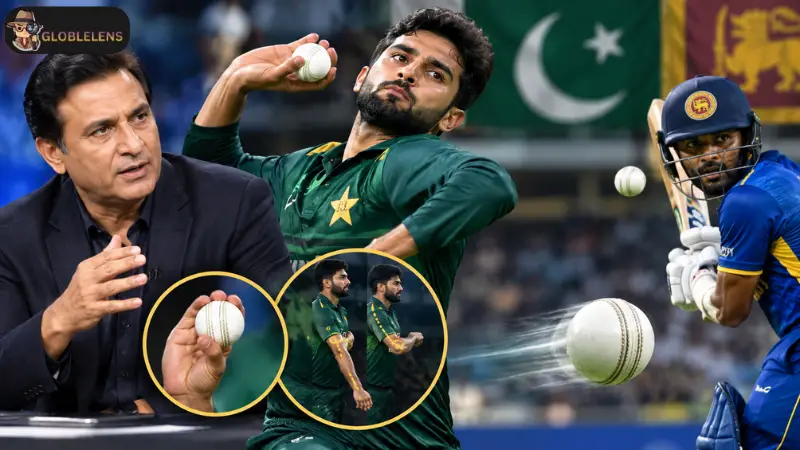
Modern cricket has witnessed a steady evolution in bowling actions, particularly in short-format white-ball cricket where bowlers actively seek non-standard delivery mechanics to gain an edge over aggressive batters. Among these innovations, mystery spinners utilizing unorthodox pause-and-release techniques have sparked intense technical and legal debates within the international cricket community.
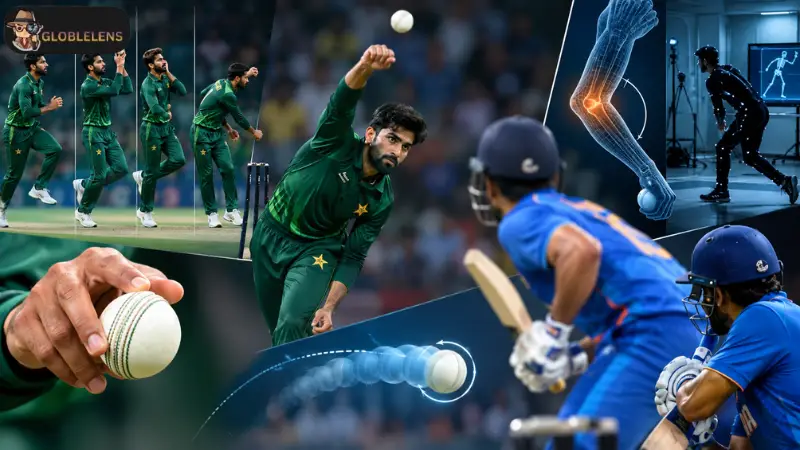
The core mechanics of mystery spin rely on disrupting a batsman's kinetic sequence. When a bowler approaches the crease, the batsman's cognitive processing tracks the bowler's momentum, arm angle, and release point to anticipate line, length, and trajectory. Bowlers like Pakistan's Usman Tariq incorporate a near-total pause at the point of delivery before utilizing a wrist-and-finger snap, commonly known as a carrom ball or doosra variation. This pause resets the batsman's visual expectation, turning routine timing into a reactive struggle.
However, unconventional actions frequently face scrutiny under International Cricket Council (ICC) regulations regarding elbow extension. The legal threshold permits an elbow flex of up to 15 degrees during the delivery phase. In instances involving natural physiological traits, such as hyper-mobility or dual-jointed elbow structures, visual inspection can lead to premature accusations of illegal actions. Comprehensive bio-mechanical laboratory analysis using high-speed 3D motion capture technology remains the sole official standard for determining legality.
The tactical integration of legally cleared mystery spinners provides teams with a major defensive and offensive capability. Beyond merely restricting boundaries in middle overs, these bowlers force middle-order batters to abandon high-risk lofted shots in favor of defensive play. As bio-mechanical testing becomes more accessible and precise, cricket is likely to see further acceptance of physiologically unique bowlers who push the boundaries of conventional bowling techniques.