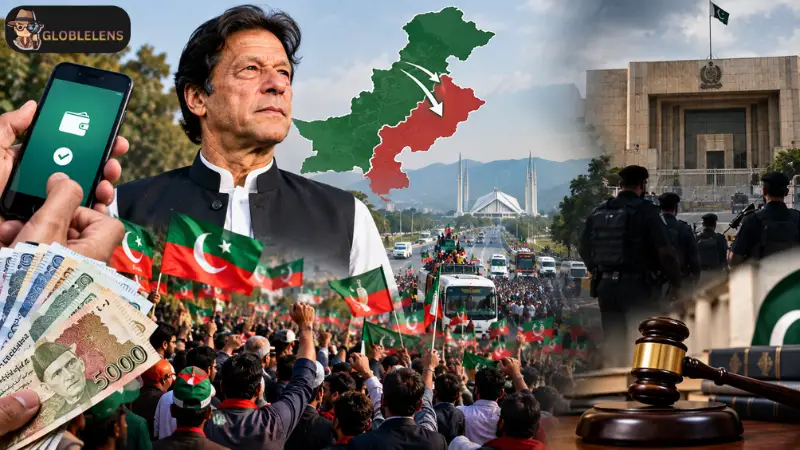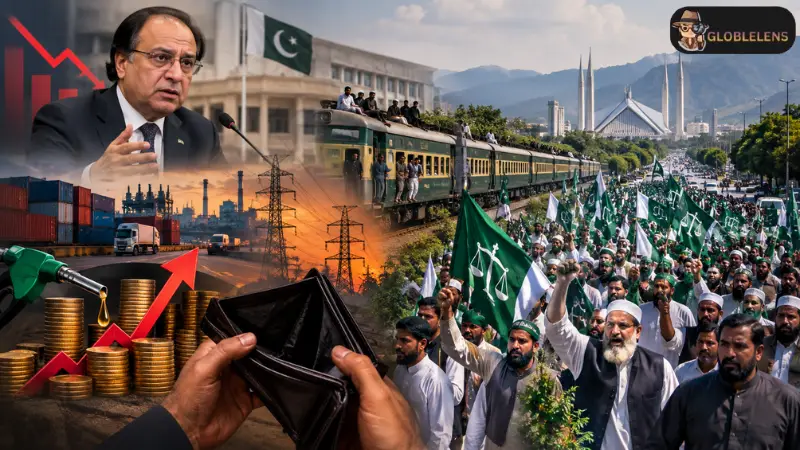
Pakistan's economic leadership has expressed severe concern over the economic fallout of recurring political demonstrations, sit-ins, and long marches. Finance Minister Muhammad Aurangzeb released official estimates indicating that continuous public protests and urban blockades result in daily economic losses approaching PKR 120 billion. The statement comes as Jamaat-e-Islami (JI) launches its latest long march toward Islamabad, protesting high electricity tariffs, burdensome fuel levies, and broader economic pressures facing the public.
The economic assessment provided by the Finance Ministry highlights the direct disruptions caused to supply chains, industrial productivity, commercial retail, and tax collection mechanisms during political lockouts. According to government figures, transport halts and security closures severely hinder domestic trade flows, exacerbating inflation and deteriorating investor confidence at a critical time when Pakistan is seeking economic stabilization under international financial frameworks.
Critics and political analysts, however, contend that official economic cost calculations are often applied selectively depending on the political origin of the demonstrations. Proponents of public protests point out that structural economic challenges, including heavy taxation, unsustainable energy agreements with Independent Power Producers (IPPs), and border closures affecting regional trade, contribute more fundamentally to economic distress than civil demonstrations.
A notable aspect of Jamaat-e-Islami's recent march is its logistical strategy. Demonstrators utilized national railway services to transport participants toward the capital. Because rail infrastructure operates under direct federal jurisdiction, the movement of protest groups via train highlighted unique administrative decisions, as federal authorities opted not to halt rail transit despite ongoing state security preparations in Islamabad.
The ongoing friction between state economic policy and public protest highlights a fundamental dilemma. While the government stresses the imperative of maintaining operational continuity and fiscal discipline, public dissatisfaction regarding rising living costs continues to drive political mobilization. Balancing economic stabilization policies with civil rights and public grievances remains one of the primary hurdles facing Pakistan's administrative apparatus.