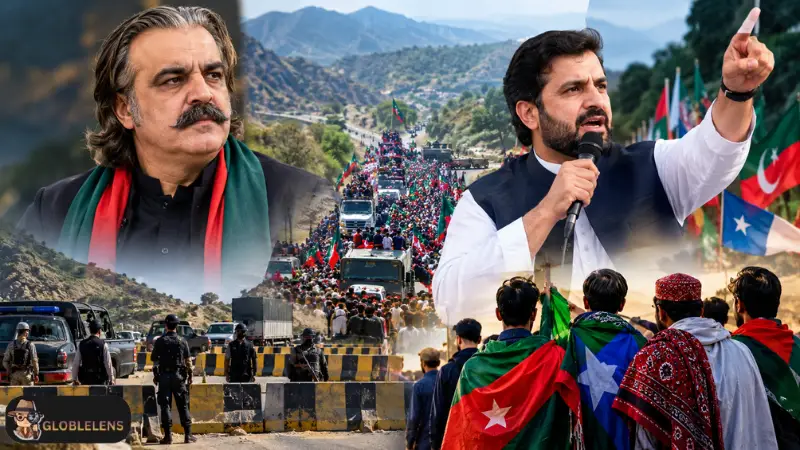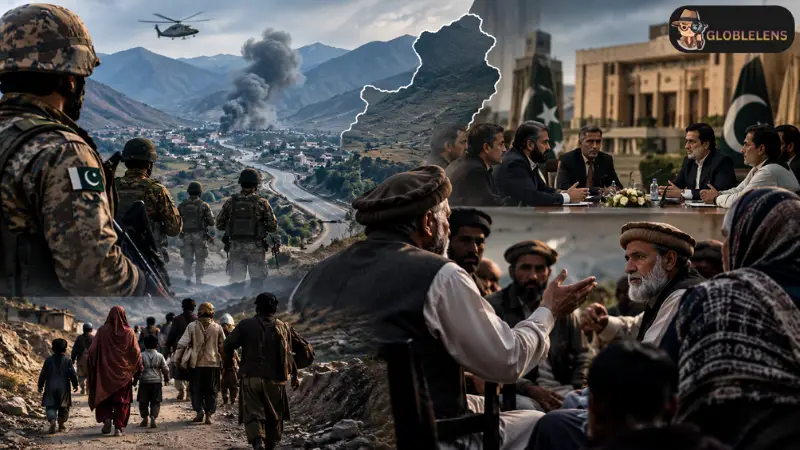
Security policy in Khyber Pakhtunkhwa has re-emerged as the primary point of contention between federal security apparatuses and regional political representatives. Discussions surrounding prospective counter-terrorism operations in vulnerable districts have brought critical policy disagreements into public view. At the core of the debate is the tension between centralized security measures and local demands for consultation, transparency, and civil protection.
Reports concerning recent political and security negotiations indicate deep disagreements over the parameters of proposed security operations. Disclosures regarding proposed legislative drafts reveal disputes over timing and jurisdiction, specifically regarding executive emergency declarations across multiple southern districts. Regional negotiators have strongly resisted unilateral security enforcement, advocating instead for strategies that emphasize local governance and community confidence over broad military measures.
The history of counter-terrorism operations in the region informs much of the public skepticism toward new security initiatives. Past military campaigns and aerial strikes, while targeting insurgent networks, frequently resulted in large-scale civilian displacement and economic disruption. Regional leaders argue that top-down security decisions made without civil input fail to yield long-term stability and often perpetuate cycles of instability.
A major concern voiced by provincial representatives is the governance vacuum created when military solutions take precedence over civil institutions. Political figures emphasize that sustainable counter-terrorism requires empowering local law enforcement, improving judicial infrastructure, and addressing root socioeconomic vulnerabilities. The demand for an absolute veto over kinetic operations reflects a broader push to assert provincial authority over domestic security matters within their territorial boundaries.
As federal authorities weigh options to restore state control and combat militant resurgences, the pushback from provincial leadership underscores the limitations of purely kinetic state policies. Achieving durable security in Khyber Pakhtunkhwa will ultimately require reconciling federal security imperatives with the democratic rights and welfare of the local population. Without political consensus, counter-terrorism frameworks risk triggering widespread public pushback and undermining national security objectives.