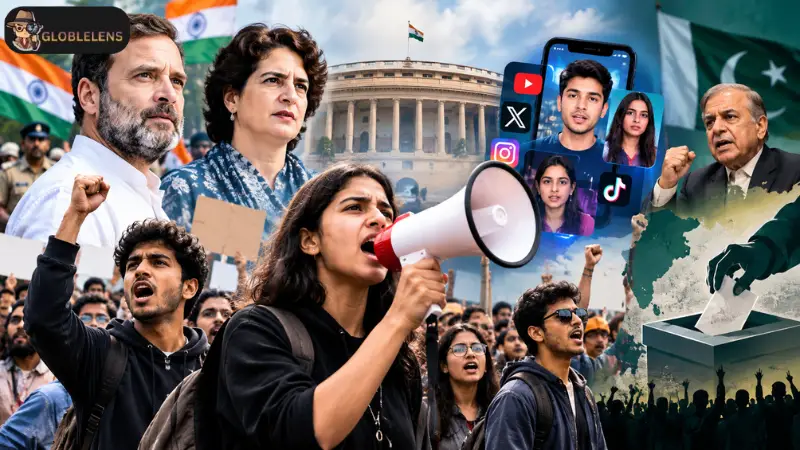
Political landscape in South Asia is witnessing a surge in youth-led political mobilization, driven by issues of democratic transparency, electoral integrity, and state accountability. In India, recent protests led by Generation Z activists and opposition political figures have highlighted growing public scrutiny over electoral administration and governance standards.
Following high-profile student demonstrations that previously influenced executive decisions, youth groups have targeted electoral authorities over allegations of voting irregularities. Mobilizations across major urban centers have seen active participation from young influencers, student unions, and senior political leaders, including Rahul Gandhi and Priyanka Gandhi. Protesters have engaged in civil disobedience, staging sit-ins and rallies demanding institutional accountability.
Key youth figures, such as Deepke, Neha Bhura, and prominent digital content creator Dhruv Rathee, have leveraged social media platforms to amplify awareness around electoral transparency. Slogans demanding immediate resignations of accountable officials have resonated across campuses and public spaces, signaling a shift in how political messaging is crafted and consumed in the digital age.
The contrast between regional youth movements underscores differing structural environments. In India, political leaders participate directly in street-level demonstrations, engaging with law enforcement and confronting state machinery. In Pakistan, veteran political figures like Javed Hashmi have issued public calls advocating for greater youth involvement and resistance against state overreach, comparing current democratic challenges to historical movements for political rights.
Political observers note that Gen Z activism across the subcontinent reflects a broader refusal to accept closed-door executive decisions or unverified electoral processes. As digital tools continue to democratize information access, traditional state controls face unprecedented pushback from a demographic that prioritizes transparency, civil liberties, and immediate institutional responsiveness.