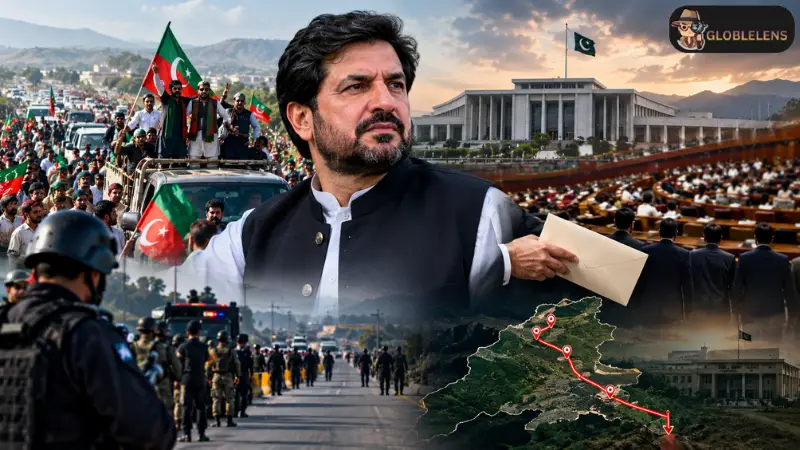
On the third day of the Pakistan Tehreek-e-Insaf (PTI) Long March, political dynamics took a high-stakes turn as key leadership unveiled a strategic pivot. Led by prominent figures including Chief Minister Sohail Afridi, the convoy demonstrated both mobilization strength and tactical flexibility amid growing confrontation with state machinery and federal authorities.
The third day marked a significant transition from routine street demonstration toward high-level parliamentary leverage. While earlier phases focused on public mobilization across Khyber Pakhtunkhwa and major transit corridors, updated field directives altered the march’s immediate operational trajectory. Rather than pressing forward into direct physical blockades at heavily fortified capital checkpoints, leadership signaled a structured tactical shift. This adjustment aims to maintain political momentum while minimizing direct attrition with law enforcement agencies deployed along key highways.
A central element of this evolving strategy involves the parliamentary leverage held by PTI lawmakers. Internal discussions within party leadership have brought the prospect of mass resignations back to the forefront. By threatening a coordinated departure from legislative assemblies, the party seeks to create an immediate constitutional deficit, placing systemic pressure on the federal coalition government. Analysts observe that utilizing assembly seats as bargaining chips allows the opposition to challenge the legitimacy of current legislative proceedings without relying solely on physical confrontation in urban centers.
At the center of this field mobilization is Sohail Afridi, whose active presence on the ground has energized supporters across regional strongholds. His decision to adjust logistics and alter movement routes during the long march highlights a deliberate attempt to outmaneuver security barriers and administrative restrictions. By continuously altering the convergence points and rally schedules, the leadership has complicated state efforts to contain the crowds, maintaining a fluid and unpredictable pressure campaign.
Federal authorities, represented by interior administration officials, have responded with heightened security protocols, warning against unauthorized access to restricted zones. Meanwhile, rumors regarding administrative measures such as the potential imposition of Governor's Rule in Khyber Pakhtunkhwa reflect the severity of the institutional standoff. The intersection of mass street turnouts, constitutional maneuvers, and tactical shifts underscores a pivotal juncture in Pakistan's ongoing political turbulence.

