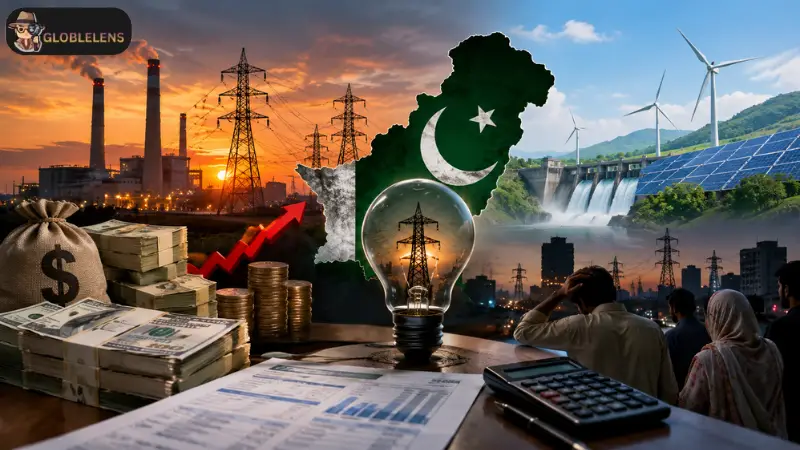
Pakistan faces an unprecedented economic bottleneck driven by structural flaws in its energy governance. Over recent months, the financial toll of Independent Power Producers (IPPs) has re-emerged as a major point of public and expert criticism. Despite persistent countrywide load-shedding and an under-utilized national grid, the federal government dispatches immense sums to private power producers to satisfy fixed capacity payment terms, regardless of whether electricity is generated or consumed.
The Fiscal Toll of Capacity Payments In just 11 months, government disbursements to IPPs reached approximately PKR 2.935 trillion (around $12 billion). To contextualize this outlay:
Comparison with IMF Assistance: The $12 billion disbursed to IPPs in under a year matches the scale of multi-year financial assistance packages secured through strenuous negotiations with the International Monetary Fund (IMF).
Missed Infrastructure Opportunity: A capital allocation of this magnitude could have funded multi-gigabyte hydroelectric plants, run-of-the-river projects, or modern solar and wind generation systems, infrastructure capable of delivering clean, renewable energy at a fraction of current costs.
Sovereign Guarantees and Structural Conflict The root of this crisis lies in sovereign contracts signed during previous political regimes. Many agreements guaranteed long-term capacity payments denominated in or indexed to foreign currency, shielding power generation firms from currency depreciation and demand fluctuations while transferring the financial risk onto citizens through rising consumer tariffs.
Furthermore, severe conflict-of-interest allegations persist surrounding family members of political figures and state-linked entities holding lucrative stakes in IPP projects. Commercial bank financing, often backed by government guarantees, enabled elite-backed ventures to secure 30-year purchase agreements, allowing investors to recoup initial costs and generate massive returns through guaranteed capacity charges paid by the state.
Compounding Consumer Inflation: Unprecedented utility prices, combined with rapid petrol and diesel rate adjustments, have eroded consumer purchasing power and heightened public dissatisfaction.
Deindustrialization Risks: High electricity tariffs make local industrial goods uncompetitive internationally, discouraging long-term private sector investment.
Public Discontent: Unchecked energy costs fuel growing domestic frustration and ongoing political instability.
Addressing Pakistan's power sector crisis requires a fundamental restructuring of IPP contracts, audit transparency, and a transition away from expensive thermal generation toward cheap, domestic renewable sources.