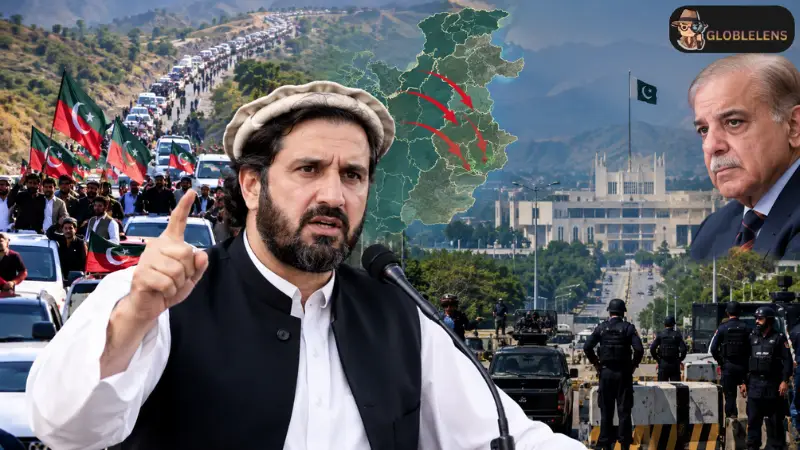
The political dynamic in Pakistan has reached a critical juncture as the Pakistan Tehreek-e-Insaf (PTI) political movement advances through its multi-day protest movement, termed the "Freedom Long March." At the center of this political push is Khyber Pakhtunkhwa Chief Minister Sohail Afridi, who replaced former Chief Minister Ali Amin Gandapur following direct instructions from incarcerated party founder Imran Khan. Afridi has emerged as the principal political operator orchestrating the confrontation between the provincial leadership of Khyber Pakhtunkhwa and the federal government in Islamabad.
The current political mobilization follows the formal collapse of high-stakes negotiations between the federal government and opposition representatives. Key deadlock issues during the talks included immediate access to Imran Khan by his personal physicians, the unconditional release of political detainees, and fundamental disagreements regarding security policy coordination and military operations in Khyber Pakhtunkhwa. With negotiations dissolved, the opposition leadership shifted strategy from diplomatic engagement to active street mobilization, initiating a five-day march across major districts of Khyber Pakhtunkhwa.
Afridi’s leadership style represents a noticeable departure from conventional party politics. Rising through the ranks of PTI student politics rather than traditional political dynasties, Afridi commands strong support among provincial youth and tribal networks. His strategy has prioritized systemic staging within Khyber Pakhtunkhwa, directing regional convoys from southern districts such as Lakki Marwat, Karak, Kohat, and Hangu toward central nodes in Peshawar, Budh Bair, Matni, and Charsadda. Rather than executing a rushed advance toward Islamabad, the strategy focuses on consolidating provincial support before converging at the Khairabad border.
The federal administration, led by Prime Minister Shehbaz Sharif and backed by interior authorities, has instituted strict security measures across major access routes. Federal officials maintain that provincial resources and state machinery must not be utilized for political agitation, warning that any attempt to breach federal territory or cause public disruption will face law enforcement intervention. Concurrently, federal authorities have raised the prospect of executive intervention under constitutional provisions, including the potential enforcement of Governor's Rule in Khyber Pakhtunkhwa under Article 234 should provincial operations challenge federal jurisdiction.
Political analysts observe that Afridi’s methodical mobilization presents a dual operational challenge for federal authorities. By sustaining pressure while remaining within provincial borders during initial phases, the Khyber Pakhtunkhwa administration forces federal leadership to maintain high-alert security postures continuously. The ultimate direction of this political standoff rests on the planned gathering at Khairabad, where the provincial leadership is set to announce its final strategy regarding an advance toward the federal capital.

