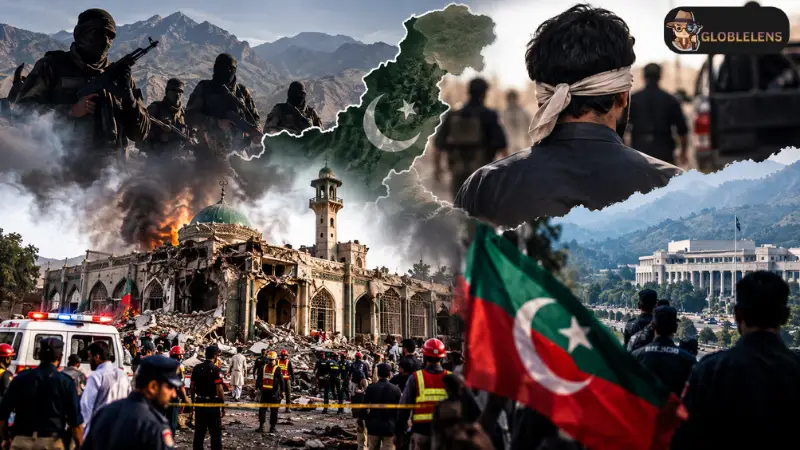
A catastrophic explosion targeting a mosque inside the old Police Lines in Kohat, Khyber Pakhtunkhwa (KP), has left at least 16 dead and dozens injured, underscoring a worsening security crisis across Pakistan's northwestern belt. The attack, executed by multiple militants where one detonated a suicide vest while others engaged in gunfire, triggered emergency protocols across regional hospitals. This bloody breach occurs amidst broader military operations and vocal public resistance against kinetic campaigns in tribal districts, alongside allegations of clandestine private militias operating in Balochistan comprised of former Afghan soldiers.
Concurrently, a parallel political crisis is unfolding within Khyber Pakhtunkhwa. Despite the Pakistan Tehreek-e-Insaf (PTI) holding state governance in the province, its key representatives and affiliates are subjected to unexplained disappearances. The recent abduction of Amir Hijaz, General Secretary of the Insaf Lawyers Forum (Peshawar Region) from Mardan, highlights a systemic vulnerability. Official reports registered at the Rustam Police Station offer no resolution, fueling accusations that provincial law enforcement mechanisms are either compromised or complicit. Similar abductions reported in Swat and Malakand involving associates of senior leaders reflect a widening crackdown where local authorities seem impotent.
Critics point out a profound mismatch in state priorities. While law enforcement agencies and interior ministry officials focus administrative energy on political suppression, issuing confrontational public warnings and detaining opposition activists, border security and counter-terrorism measures appear neglected. The provincial government's attempts to curtail police powers through legislative bills highlight an internal struggle to prevent state machinery from being weaponized against political entities.
The compounding challenges of state security failures and law enforcement overreach present a dangerous precedent. When internal security apparatuses are diverted toward stifling civil liberties and political dissent, counter-terrorism operations suffer, leaving vulnerable public and security installations exposed to insurgent violence.

