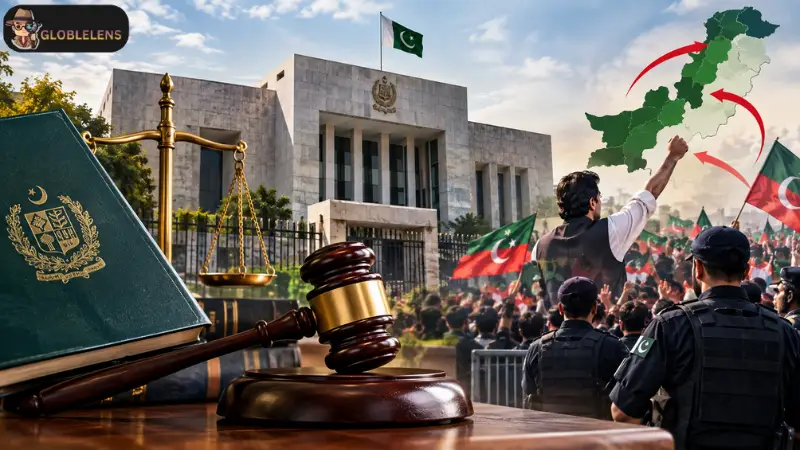
The legal and regulatory framework surrounding political mobilization in Pakistan faces heightened scrutiny as higher judicial forums issue directives regarding planned public demonstrations. Recent proceedings in the Islamabad High Court (IHC) have focused on the procedural limits governing inter-provincial political movements, specifically addressing concerns over public order, federal jurisdiction, and the right to peaceful assembly.
Central to the ongoing legal debate is the tension between fundamental rights granted under the Constitution of Pakistan and the state's responsibility to prevent civil disruption. Opposition leaders, led by Pakistan Tehreek-e-Insaf, maintain that public rallies are fully protected under constitutional guarantees of freedom of movement and assembly. However, government prosecutors and administrative bodies have repeatedly cited public safety concerns, traffic disruptions, and security risks to justify restricting large-scale political gatherings within major urban centers.
The judicial intervention comes at a pivotal moment, as opposition strategists prepare for major demonstrations planned for late September. Courts are being asked to determine whether provincial officials and party figures can be legally restrained from crossing administrative boundaries to lead political campaigns in neighboring provinces. Legal experts note that judicial orders balancing executive authority with constitutional protections will significantly impact how future political campaigns are conducted across state lines.
Simultaneously, questions regarding equal treatment under the law continue to dominate court petitions filed by imprisoned political figures and party supporters. The legal battles extend into federal constitutional interpretation, with ongoing discussions centered on whether specialized constitutional benches will preside over high-profile political disputes and jurisdictional conflicts between federal and provincial authorities.
As both the executive branch and opposition leadership await definitive legal rulings, the judiciary remains the central forum for navigating the boundaries of state authority. The court's decisions in the coming weeks will likely set crucial precedents for civil liberties, administrative enforcement, and political rights in Pakistan.

