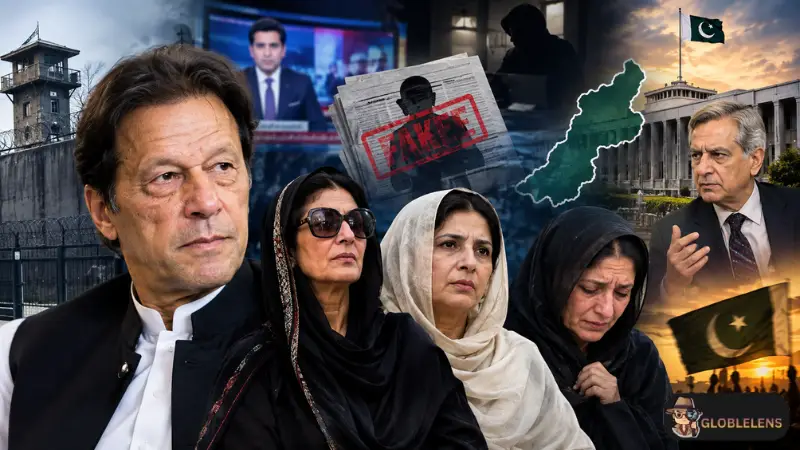
In a rapidly shifting political landscape, Pakistan finds itself at the epicenter of a fierce narrative war. A major surge in rumors and unverified news reports regarding Pakistan Tehreek-e-Insaf (PTI) founder Imran Khan and his family has triggered widespread public confusion and intense political debates. The controversy ignited following a high-profile media report aired on ARY News, which claimed that specific internal political instructions regarding Khyber Pakhtunkhwa's administration, including rumors surrounding Chief Minister Ali Amin Gandapur, Sohail Afridi, and motion-of-no-confidence directives, had been passed directly from Imran Khan through his family members.
However, the Khan family issued an official statement categorically rejecting these mainstream media narratives. Shershah Khan, son of Aleema Khan, released a public statement on behalf of the family clarifying that reports of such conversations are entirely fabricated and baseless. The statement highlighted that Noreen Niazi last met Imran Khan at Adiala Jail on August 25, 2026, pursuant to explicit Supreme Court orders, and no details or political directives of the nature being reported were ever shared.
Political analysts argue that the propagation of such narratives reflects a strategic pattern of "table stories", fabricated intelligence or media leaks designed inside administrative, political, or media offices rather than sourced from ground realities. Such disinformation campaigns take advantage of the forced isolation of political prisoners, who lack immediate avenues to directly address or debunk false claims to the public.
Compounding the political tension is the severe restriction placed on the fundamental rights and medical care of Imran Khan’s sisters, including Dr. Uzma Khan, Aleema Khan, and Noreen Niazi. Reports from family representatives, including Hajra Niazi, emphasize that legal counsel and direct family members have been repeatedly denied access to assess their health and well-being. Furthermore, investigative reporting from independent journalists confirms that Imran Khan’s sisters have engaged in hunger strikes while in custody to protest their unlawful detention and harsh treatment.
The broader implications of these developments point to severe institutional friction. While government quarters and proxy media figures repeatedly attempt to generate headlines regarding potential Governor’s Rule in Khyber Pakhtunkhwa or forced administrative shifts, political commentators note that these moves lack political legitimacy. Senior political figures, including veteran politician Javed Hashmi, have voiced sharp criticism, warning that unconstitutional administrative measures or attempts to bypass democratic mandates will only exacerbate national instability. The situation highlights an urgent need for institutional transparency, adherence to constitutional parameters, and the restoration of fundamental civil liberties.

