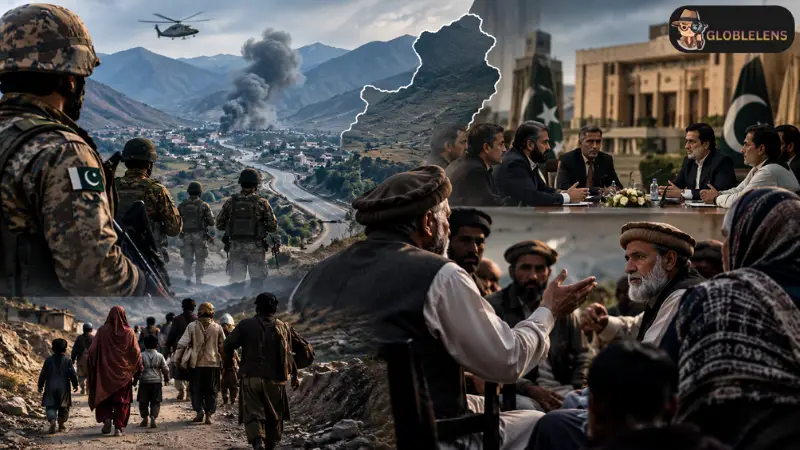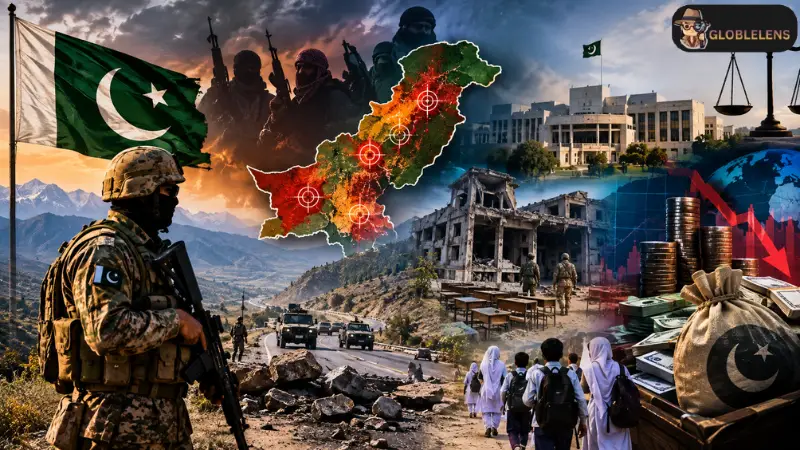
Pakistan’s national security profile has taken a dramatic hit, according to global security assessment frameworks. The latest metrics on global conflict and security reveal that Pakistan has surged to the top position as the world's most impacted nation by terrorism in 2026. This stark deterioration highlights significant gaps in long-term counter-terrorism strategies and brings the sustainability of hybrid governance under severe scrutiny.
A historic review of terrorism trends in Pakistan provides essential context for the current dilemma. Between 2011 and 2014, Pakistan consistently ranked among the top two most terrorism-affected countries in the world. Following comprehensive military operations and kinetic measures after 2014, the security situation improved substantially. By 2018, Pakistan’s ranking dropped to fifth place globally, and by 2021, it had improved to ninth place, behind nations like Afghanistan, Iraq, Somalia, and Burkina Faso.
However, the trajectory reversed sharply following political shifts and administrative restructuring in 2022. By 2023, Pakistan climbed to fourth place, moving to second in 2024, and ultimately reaching the top ranking globally by 2026. Security analysts emphasize that kinetic military actions alone are insufficient when detached from consistent political stability, institutional accountability, and genuine public representation.
Cross-country comparative analysis reveals a structural correlation between terrorism impact and non-democratic governance models. A closer examination of the top 10 nations heavily affected by terrorism, such as Burkina Faso, Mali, Somalia, and Syria, demonstrates that high conflict indices consistently intersect with military rule, authoritarian governance, weakened civil institutions, and widespread economic corruption. When civilian authority is sidelined and political mandates are delegitimized, national unity weakens, leaving governance vacuums that militant groups exploit.
In Pakistan, recent security developments reflect this expanding structural vulnerability. Beyond the traditional conflict zones in Khyber Pakhtunkhwa and Balochistan, militant movements are visibly attempting to expand into new regions, including reports of insurgent propaganda emerging from Sindh. Concurrently, civilian infrastructure remains heavily impacted, with key highways blocked and educational institutions repurposed for security personnel deployment.
Economic mismanagement further compounds the security dilemma. While regional neighbors focus on fiscal discipline and civilian austerity, as seen in Bangladesh's economic trajectory, Pakistan faces mounting sovereign debt, reliance on external bailouts, and lavish state spending. Resolving the dual security and economic crisis requires a fundamental pivot back toward constitutional governance, civilian supremacy, and transparent democratic processes.