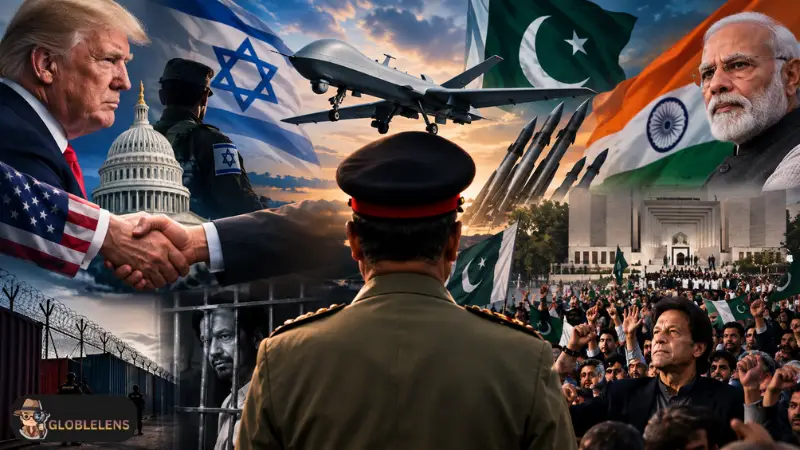
Defense procurement and geopolitical maneuvering have recently ignited a massive controversy within Pakistan, raising critical questions about the alignment of the military leadership with the ideological foundations of the state. A highly sensitive defense contract has surfaced, exposing a deal between the Pakistani military establishment and a United States based drone technology company. The revelation of this contract has sent shockwaves through political and social circles due to the deeply problematic background of the company founders and their international affiliations.
The core of the controversy centers on the origins of the drone company involved in the procurement agreement. Investigative reports and political figures have highlighted that the company was founded by a former Israeli military officer. For a nation like Pakistan, which does not officially recognize the state of Israel and holds a strong diplomatic stance regarding the Palestinian conflict, engaging in military commerce with such an entity is highly explosive. The situation is further complicated by reports indicating that this same defense company supplies interceptor missile technology to India, Pakistan primary regional rival.
Strategic analysts are examining the potential motivations behind this perplexing defense contract. The drone company reportedly receives significant financial backing from the family members of Donald Trump. Many political observers suggest that the current military leadership in Pakistan, specifically the Army Chief, may have authorized this limited procurement deal as a diplomatic gesture to curry favor with the Trump administration. In the pursuit of short term diplomatic goodwill with influential American political figures, the military leadership appears to have completely overlooked or deliberately ignored the ideological contradictions and public backlash associated with funding a company tied to former Israeli military personnel.
This controversial defense contract arrives at a time when the military leadership is facing an unprecedented crisis of public confidence. Informal public opinion surveys and digital polling indicate a staggering disapproval rating for the current Army Chief. Data collected across various social media platforms reveals that an overwhelming majority of the Pakistani populace feels the current military leadership has become a liability to the nation. The stark contrast between the public support for the imprisoned former Prime Minister and the deep resentment toward the military establishment highlights a dangerous disconnect between the state apparatus and the citizens.
Veteran politicians and long standing figures in Pakistan democratic struggles are publicly vocalizing warnings that were once considered taboo. Prominent leaders are issuing unprecedented statements, openly challenging the physical barriers erected around prisons and threatening to mobilize the masses to forcefully release incarcerated political leaders. These are not merely rhetorical flourishes but indicators of a boiling point in civil military relations.
Furthermore, historical political figures are directly urging the military leadership to recognize the futility of their current authoritarian trajectory. They warn that relying on physical barriers, shipping containers, and coercive tactics will ultimately lead to institutional defeat. The consensus among seasoned observers is that the military establishment must step back from political engineering and questionable international contracts. The nation requires a complete reset of civil military boundaries to stabilize the collapsing economy and restore public trust. Without a return to constitutional supremacy, the state risks pushing its citizens toward a total systemic rebellion.

