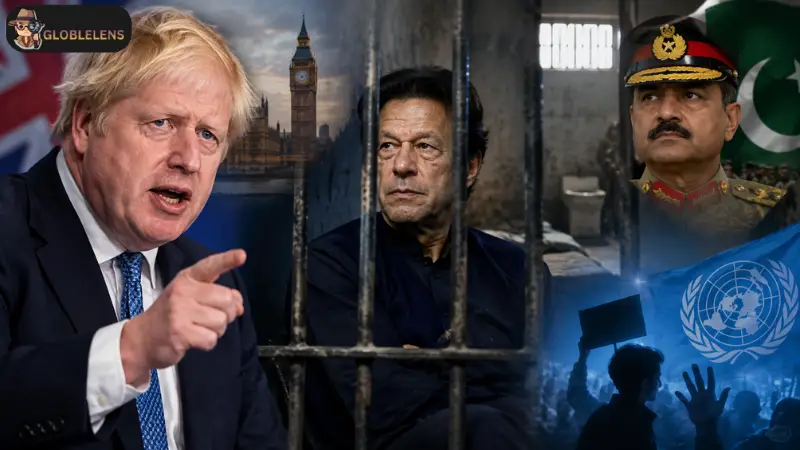
Former British Prime Minister Boris Johnson has launched a scathing international intervention regarding the prolonged imprisonment of former Pakistani Prime Minister Imran Khan. Writing an authoritative op-ed published in the Daily Mail, Johnson raised severe human rights concerns, warning that Pakistani authorities appear to be passively waiting for the 73-year-old political leader to die in custody. The intervention marks a major escalation in international diplomatic scrutiny surrounding Pakistan's ruling power structure, led by Field Marshal Asim Munir and the federal coalition government. Johnson’s article details the harsh confinement conditions under which Khan is currently being held. The former prime minister is reportedly confined to a damp, insect-infested cell measuring roughly six by eight feet, including an open lavatory. Khan has been subjected to prolonged periods of solitary confinement, restricted access to basic light, and prolonged deprivation of reading materials or visitors. Furthermore, the report highlights that inadequate medical attention has led to Khan losing nearly 85 percent of the vision in his right eye.
The global spotlight on Khan's detention aligns with recurring condemnations from international human rights bodies. The United Nations Special Rapporteur on Torture has repeatedly raised formal objections over the past two years, alongside severe warnings issued by Amnesty International. Even internal judicial bodies in Pakistan, including the Supreme Court, have previously expressed grave concerns over the denial of proper medical facilities to the high-profile prisoner.
Political analysts emphasize that the charges brought against Khan, specifically surrounding state gift retentions and land trust donations, are widely recognized as politically motivated maneuvers. Most charges initially brought against Khan have either collapsed under judicial review or lack substantive evidence showing direct financial gain by Khan or his family. Instead, international observers point toward a calculated attempt by the military establishment to purge Khan permanently from Pakistan's political landscape.
Johnson highlighted Khan's former governance efforts, noting his environmental initiatives and policies focused on expanding female literacy in a country where female literacy rates remain critically low. While acknowledging past diplomatic friction regarding foreign policy positions on Russia and Afghanistan, Johnson stressed that no political disagreements justify the brutal treatment of a former head of state.
The critique also extends to the British Foreign Office, which Johnson accused of taking an excessively timid stance despite Pakistan's deep diplomatic, historical, and diaspora connections with the United Kingdom. As global awareness builds, pressure is mounting on Western governments to abandon political pragmatism and demand the immediate release or house arrest of Imran Khan, framing his survival as a critical test for the future of democratic governance in South Asia.

