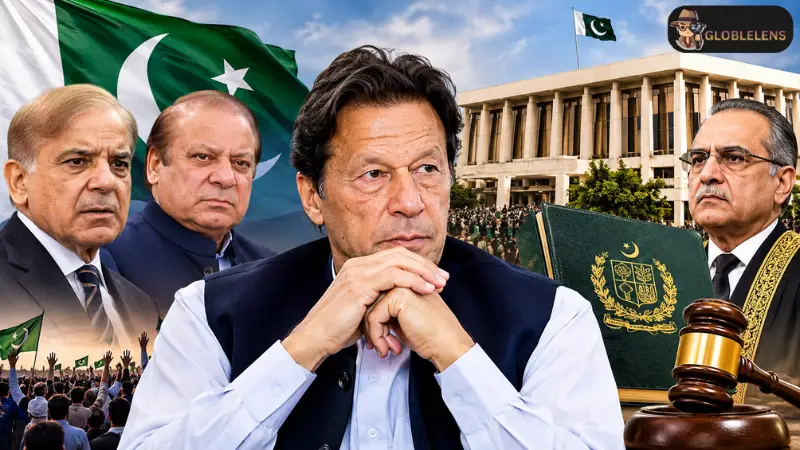
The contemporary political landscape of Pakistan is experiencing a profound phase of structural realignment, centering heavily around high stakes legislative negotiations, institutional friction, and evolving public sentiment. At the heart of this evolving paradigm is the discussion surrounding the proposed 28th Constitutional Amendment, alongside the shifting posture of key political actors, most notably incarcerated Pakistan Tehreek-e-Insaf (PTI) founder Imran Khan. As ruling coalitions grapple with internal vulnerabilities and external diplomatic pressures, the center of gravity in national politics has once again pivoted toward Adiala Jail, where strategic decisions made behind closed doors are reshaping the country's legislative and executive future.
The proposition of the 28th Constitutional Amendment has transformed into a critical catalyst for political friction. Legislative reforms of this magnitude require broad-based consensus or strategic parliamentary alignments, placing the ruling Pakistan Muslim League-Nawaz (PML-N) in a precarious position. Observers note that administrative strategies aiming to secure structural adjustments or new provincial frameworks depend heavily on securing opposition buy-in.
However, the opposition has tied its legislative cooperation to strict foundational preconditions, chief among them being the legal status and freedom of Imran Khan. Rather than yielding to executive pressure, the incarcerated leadership has maintained a hardline ideological stance. This standoff has exposed deep divisions within the ruling establishment, fostering an environment where legislative proposals are viewed not merely as administrative upgrades, but as leverage in an ongoing struggle for political survival and institutional legitimacy.
The political strain extends beyond parliament into the corridors of provincial and federal governance. The ruling PML-N faces mounting internal anxiety as public disillusionment intersects with economic and administrative challenges. Reports of policy reversals, friction among coalition partners, and strategic miscalculations have amplified concerns within the ruling ranks.
Furthermore, international optics and diplomatic engagements have added another layer of complexity. Executive leadership faces heightened scrutiny regarding governance standards, human rights compliance, and domestic stability. When foreign visits or policy announcements fail to produce tangible domestic relief, the narrative shifts toward vulnerability, empowering opposition forces to demand systemic resets and accountability through democratic avenues.
In an era defined by digital media and rapid information dissemination, political narratives are heavily shaped by independent journalism and analytical commentary. Analysts emphasize that public perception is increasingly moving away from official talking points toward deeper structural critiques of governance. The ability of political movements to maintain ideological consistency despite state pressure has transformed incarceration from a tool of marginalization into a symbol of political defiance.
As discussions surrounding constitutional changes, administrative restructuring, and potential electoral reforms continue to dominate prime-time discourse, the trajectory of Pakistan's democracy hinges on whether ruling elites opt for genuine political reconciliation or pursue exclusionary legislative tactics. Ultimately, the unfolding events demonstrate that sustainable political stability cannot be engineered without addressing foundational questions of representation, institutional overreach, and public mandate.